

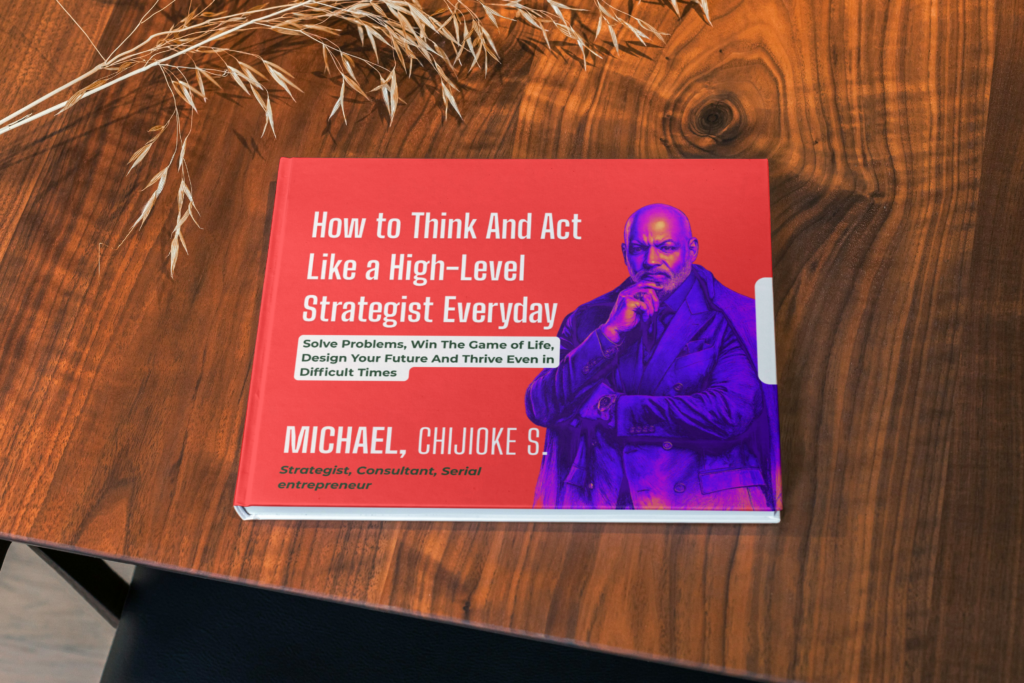
NEW BOOK ALERT: Dr. Michael Chijioke’s “How to Think and Act Like a High-Level Strategist” Targets Everyday People Seeking to Win the Game of Life
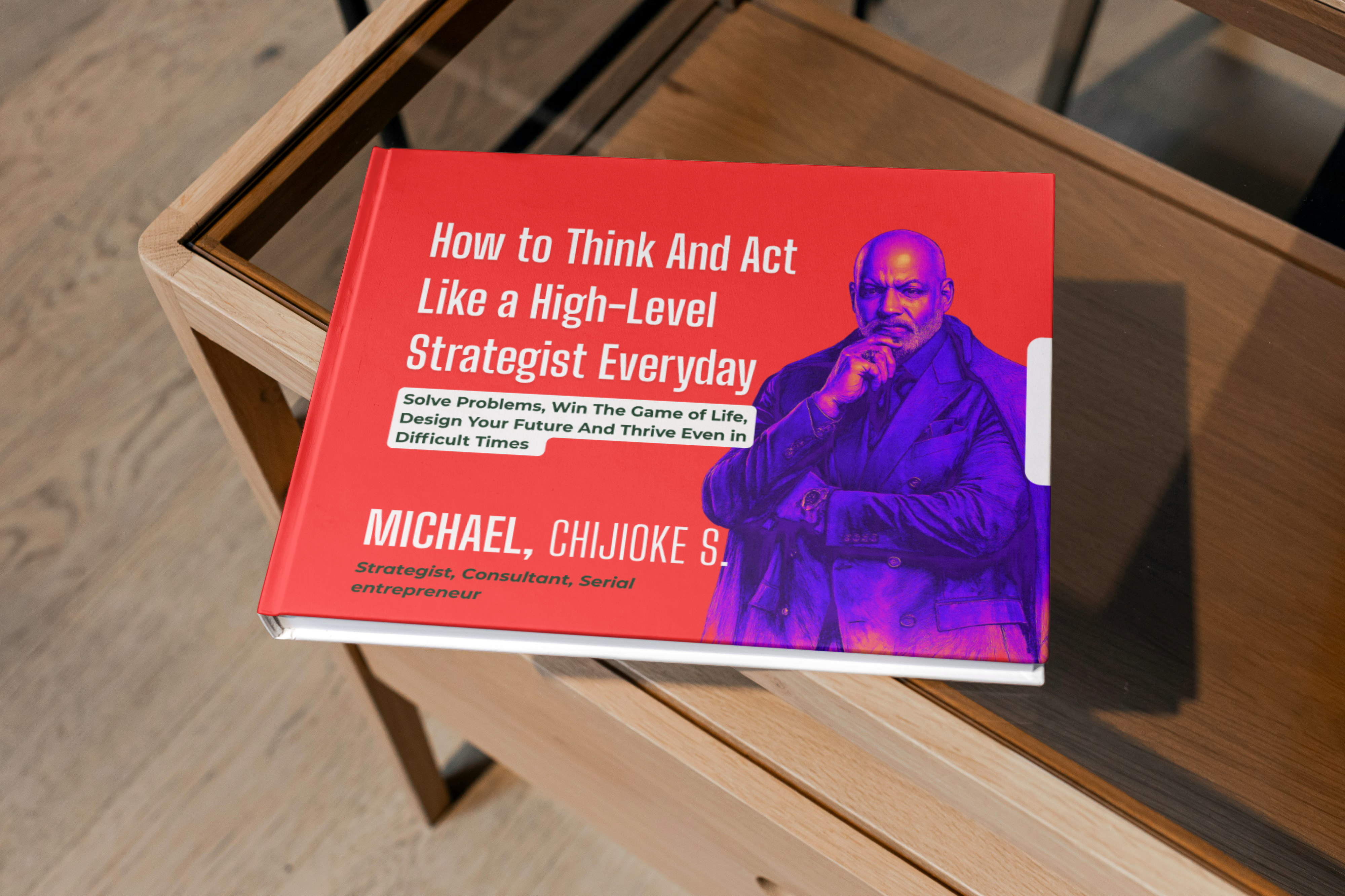
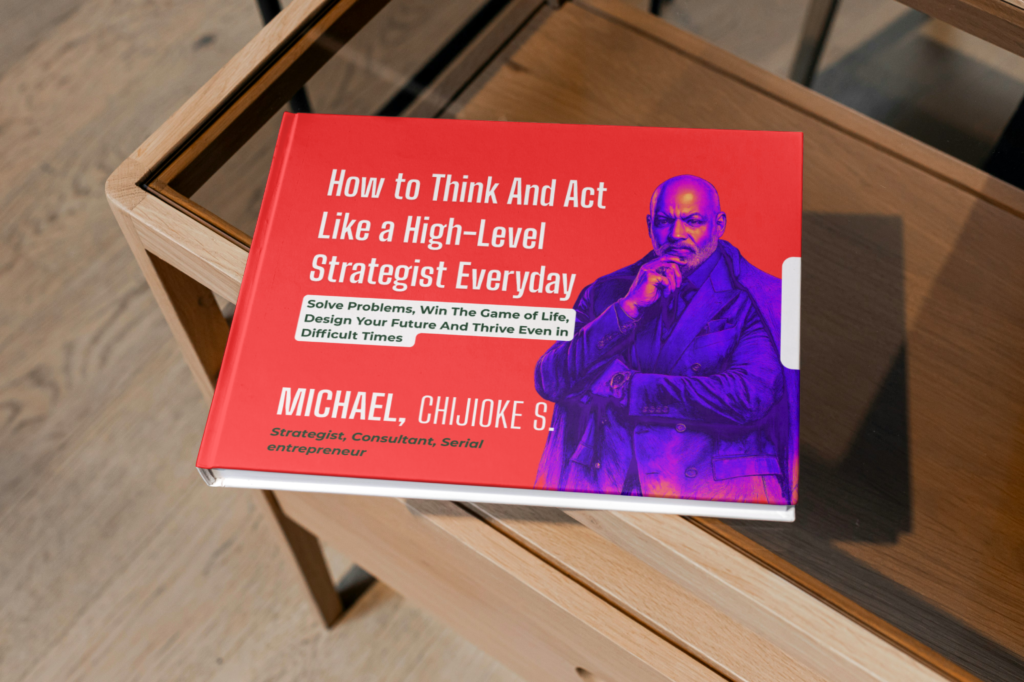
In a crowded global market saturated with leadership manuals, corporate strategy textbooks, and motivational bestsellers, a new book is positioning itself differently—and boldly so. “How to Think and Act Like a High-Level Strategist: Solve Life’s Problems, Win Every Day, Design Your Future and Thrive Even in Difficult Times”, written by Dr. Michael Chijioke (popularly known as Dr. Miki), is set for release and is already generating attention among educators, entrepreneurs, professionals, and everyday readers across Africa and beyond.
Unlike traditional strategy books that speak primarily to CEOs, generals, or elite boardrooms, Dr. Miki’s work is unapologetically written for ordinary people navigating extraordinary pressure—students, young professionals, founders, underdogs, immigrants, parents, and anyone trying to make sense of life’s uncertainty while still aiming to win.
A Strategy Book—But Not the Kind You Expect
Strategy literature has long been dominated by classics such as The Art of War by Sun Tzu, Good Strategy/Bad Strategy by Richard Rumelt, Thinking in Bets by Annie Duke, and The 48 Laws of Power by Robert Greene. These works have shaped military thinking, corporate leadership, and political maneuvering for decades.
Dr. Miki’s book enters this tradition—but with a decisive shift in focus.
“This is not a book about winning markets alone,” Dr. Miki writes in the opening chapters. “It is about winning life—daily, consistently, intelligently.”
Rather than abstract models or corporate jargon, the book grounds strategy in real life decisions: money, relationships, career choices, identity, risk, loss, adaptation, timing, and survival. It treats life itself as a game—one with rules, players, traps, seasons, and leverage points.
Written for the Underdog
At the core of the book is a powerful premise: most people are not failing because they are lazy or unintelligent; they are failing because they are playing without strategy.
Dr. Miki draws from his background as an educator, strategist, and systems thinker to speak directly to those often overlooked by mainstream strategy conversations—people without inherited wealth, political access, global exposure, or institutional privilege.
“If you are from a poor background, a developing country, a broken system, or a hostile environment,” the book argues, “strategy is not optional—it is survival.”
This framing has resonated strongly with early readers and reviewers who describe the book as “brutally honest,” “deeply practical,” and “uncomfortably accurate.”
Blending History, Psychology, and Reality
One of the defining strengths of the book is its interdisciplinary approach. Dr. Miki weaves together:
- Historical case studies (from empires that rose and fell due to internal decay)
- Biblical narratives (such as Jacob’s transformation, David’s handling of loss, and lessons from Ecclesiastes)
- Military logic (risk, terrain, timing, internal discipline)
- Behavioral psychology (decision-making, bias, emotion, and self-sabotage)
- Modern realities (social media, global competition, economic instability)
Each chapter is structured to move the reader from observation → interpretation → application, reinforcing the idea that strategy is not knowledge—it is practiced thinking.
Key Themes That Set the Book Apart
Several recurring themes elevate the book beyond conventional self-help:
1. Winning the Battle Within
The book argues that most people lose long before external conflict appears—through unmanaged trauma, pride, fear, impatience, and identity confusion. External success, it insists, is unsustainable without internal order.
2. Seeing Things for What They Are
Dr. Miki challenges readers to abandon wishful thinking and sentimental optimism. People, systems, and opportunities must be evaluated based on patterns—not promises.
3. Time and Chance
Drawing from Ecclesiastes, the book explains why talent alone is insufficient and why understanding seasons, timing, and opportunity windows often determines outcomes more than brilliance.
4. Adaptation and Survival
From animals to organizations, the strategist must learn to adapt or die. The book critiques rigidity, entitlement, and nostalgia for old methods that no longer work.
5. Decision Architecture (COAO Framework)
Readers are introduced to a practical decision-making model—Challenge, Options, Actions, Outcomes—designed to reduce emotional decision-making and increase clarity under pressure.
6. Independence Without Isolation
Perhaps one of the most striking chapters warns against building life plans on other people’s promises, generosity, or resources. “Never grow teeth in anticipation of someone else’s yam,” the author writes, emphasizing responsibility, self-reliance, and realistic expectations of human behavior.
A Book for This Era
The timing of the book’s release is notable. As economies fluctuate, careers destabilize, and institutions lose trust globally, more people are asking hard questions:
- Why does effort not always equal reward?
- Why do intelligent people still struggle?
- How do you win when the rules keep changing?
Dr. Miki’s book does not offer comforting illusions. Instead, it offers clarity, structure, and agency—three things many readers feel have been missing from conventional advice.
Not Motivation—Orientation
What distinguishes How to Think and Act Like a High-Level Strategist is its refusal to rely on hype. This is not a “believe and receive” manual. It is a thinking manual.
The book repeatedly reinforces one central idea:
Strategy is not about winning every time. It is about improving your odds consistently.
That alone places it in a different category from motivational literature.
Early Reception and Expected Impact
Though yet to be officially launched, excerpts and chapters circulated among private readers, educators, and entrepreneurs have sparked strong responses. Many describe the book as one they wish they had read earlier in life.
Industry observers expect the book to gain traction particularly among:
- Young professionals and founders
- Students and career switchers
- Leaders in volatile environments
- Readers in Africa, emerging markets, and the global diaspora
A New Entry into the Strategy Canon
While it may be premature to rank the book alongside centuries-old classics, it is clear that Dr. Miki’s work is carving out its own lane—strategy for everyday survival and long-term advancement.
If The Art of War taught leaders how to win battles, and modern strategy books taught executives how to win markets, How to Think and Act Like a High-Level Strategist aims to teach ordinary people how to win life itself.
As one early reader summarized:
“This book doesn’t make you feel powerful. It makes you think powerfully.”
The book is expected to be available soon in both print and digital formats. For readers tired of reacting to life—and ready to start designing it—this may be one of the most practical strategy books to pick up this year.